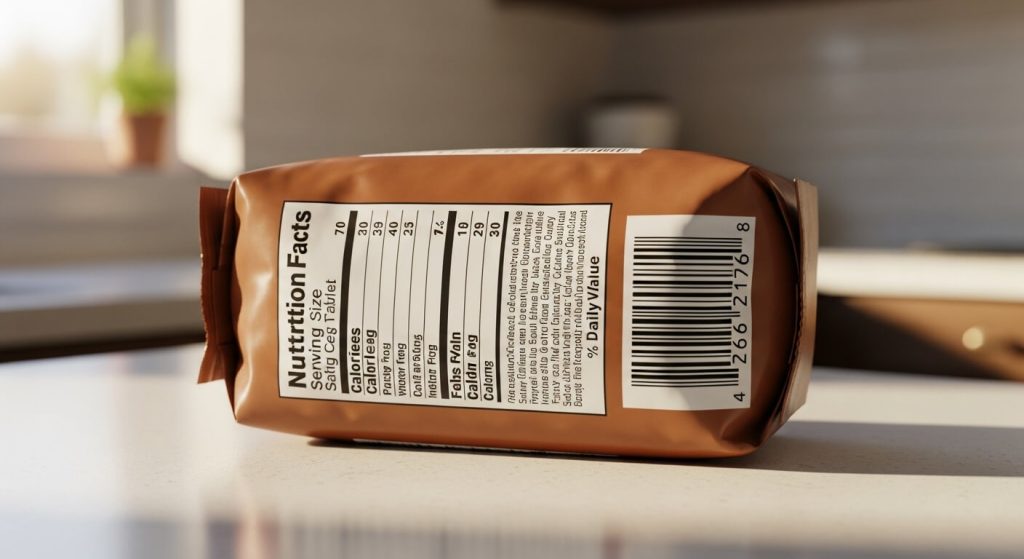
Most people glance at the front of packages but miss the crucial details on the back. Learning to read nutrition labels helps you make informed food choices that align with your health goals. The key is knowing where to look first: serving size, % Daily Value, and a few target nutrients that matter for your situation.
Find the Actual Serving Size Behind the Numbers
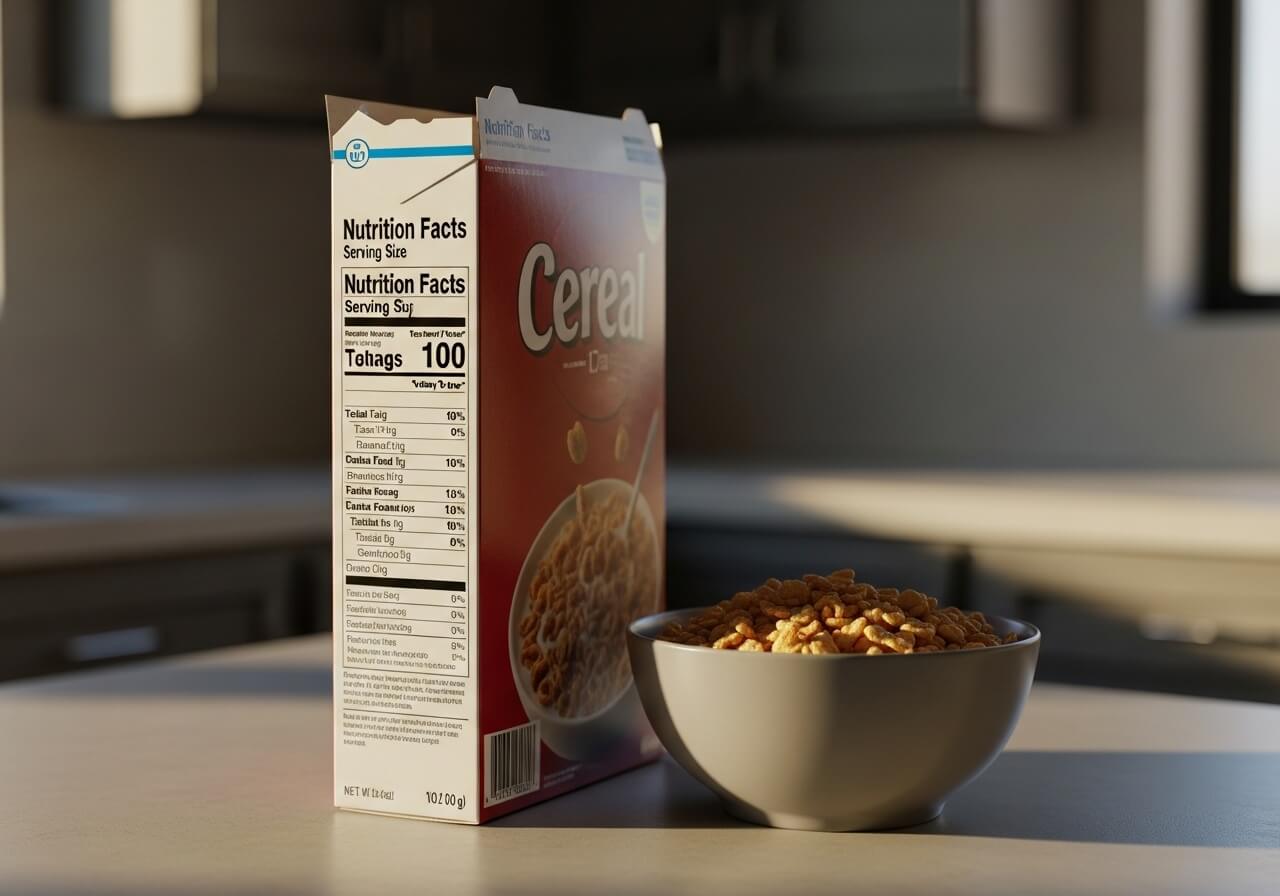
The serving size is the foundation of every number on a nutrition label. Every calorie, gram of protein, milligram of sodium—all of it is based on one serving, not the entire package.
The serving size appears near the top of the Nutrition Facts panel, listed in both household measurements (like “1 cup”) and metric weight (like “240g”). Next to it, you’ll find “servings per container,” which tells you how many servings the package contains.
Here’s the critical detail: the serving size on the label is not a recommendation for how much you should eat. It reflects what people typically consume, but your actual portion might be different. If you eat twice the serving size listed, you need to double every nutrient value to know what actually went into your body.
Start by comparing the listed serving size to what you actually eat. Pour your usual cereal portion into a bowl, then check the box. Do you eat one serving or three? If a snack bag says “2 servings per container” but you eat the whole thing, multiply the calories and all nutrients by two. This prevents the common mistake of thinking a package is lower in calories or sugar than it really is.
Decode Daily Value Percentages Quickly
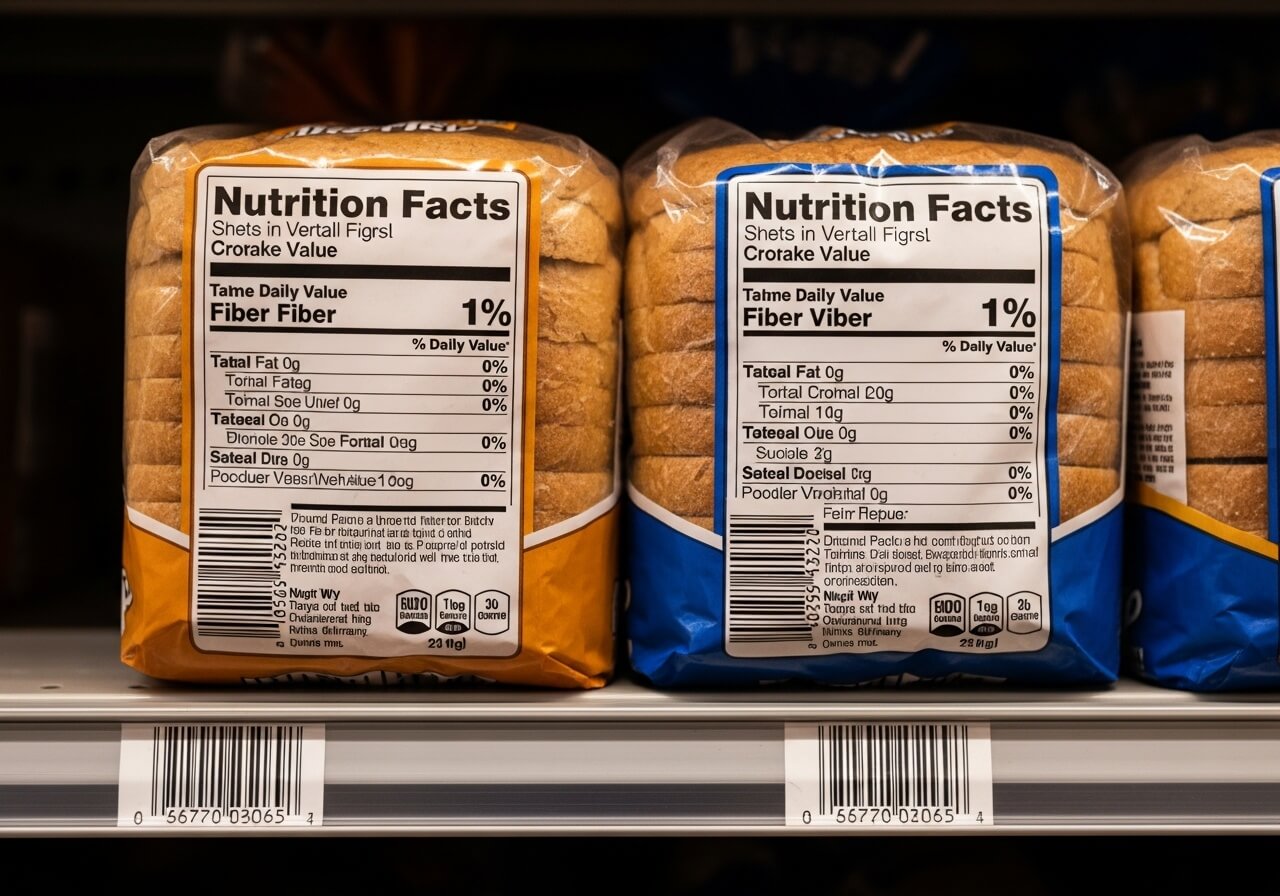
The % Daily Value (%DV) works as a shorthand for whether a nutrient is present in a small or large amount. Instead of memorizing whether 300mg of sodium is “a lot,” the label does the math for you.
The rule is straightforward: 5% DV or less is low, and 20% DV or more is high. This matters because different nutrients have different roles. For nutrients you want to limit (sodium, added sugar, saturated fat), a higher %DV signals a food you should watch. For nutrients you want more of (fiber, potassium, protein), a higher %DV means the food is a better source.
Use this in the grocery aisle to compare similar foods quickly. Two bread options sitting next to each other? Check the fiber %DV—the one with 12% DV has more fiber than one with 3% DV. Looking at two pasta sauces? The one with 8% DV for sodium is lower than one with 22% DV.
Keep in mind that %DV is based on a 2,000-calorie daily diet, which doesn’t apply to everyone. Someone eating 1,500 calories daily will need to adjust these percentages mentally, and someone following a specific diet for health reasons may need to focus on actual gram amounts. But for quick grocery store comparisons, %DV is an efficient filter.
Follow These 6 Steps to Read Any Label
A repeatable process removes the guesswork. Use this sequence every time you evaluate a new food:
- Check the serving size first. This frames all the numbers that follow. If the serving size doesn’t match what you eat, adjust your mental math for every nutrient.
- Look at the calorie count per serving. This tells you the energy density of the food, which matters for portions and overall daily balance.
- Scan the sodium content. Most people consume more sodium than recommended, so this is worth comparing across products.
- Check added sugars. This is different from total sugars—added sugars are what manufacturers put in, not naturally occurring sugars like those in fruit.
- Look at fiber content. Many people don’t get enough fiber, so a higher %DV here is generally helpful.
- Glance at protein if it matters for your goal. Protein needs vary widely, but if you’re trying to include more protein at a meal, %DV gives you a quick reference.
This six-step scan takes 10–15 seconds once you practice it. You’re extracting the information most relevant to typical dietary concerns, not reading every single nutrient.
Avoid These Common Label Misreading Mistakes
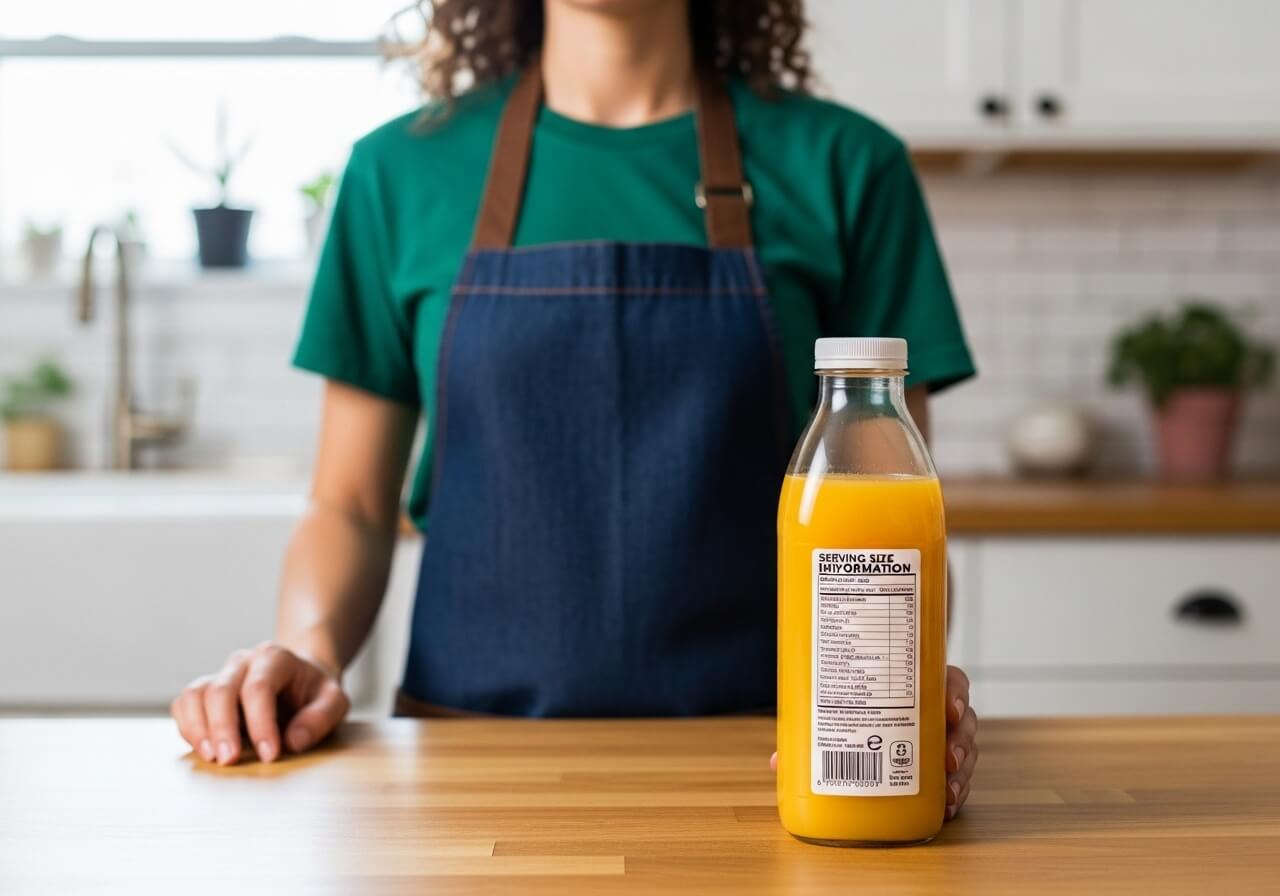
Assuming the whole package is one serving. A bottle of juice might say 2 servings per container, but many people drink it all at once. The label shows 120 calories and 26g of sugar per serving. If you drink both servings, you’ve consumed 240 calories and 52g of sugar—not the numbers on the front. Check “servings per container” every time.
Ignoring ingredient list order. The ingredient list on the back of the package is ordered by weight, with the most abundant ingredient first. If sugar appears as the second ingredient, that food contains a significant amount of sugar, regardless of the added sugars percentage. The ingredient list shows what’s in the food; the nutrition facts show the nutrient amounts. Both matter.
Thinking higher %DV is always better. Context matters. A food with 15% DV sodium is not better than one with 8% DV sodium if your goal is to limit sodium. Know whether you’re trying to limit a nutrient or consume more of it.
Adjust Your Label Reading for Specific Goals
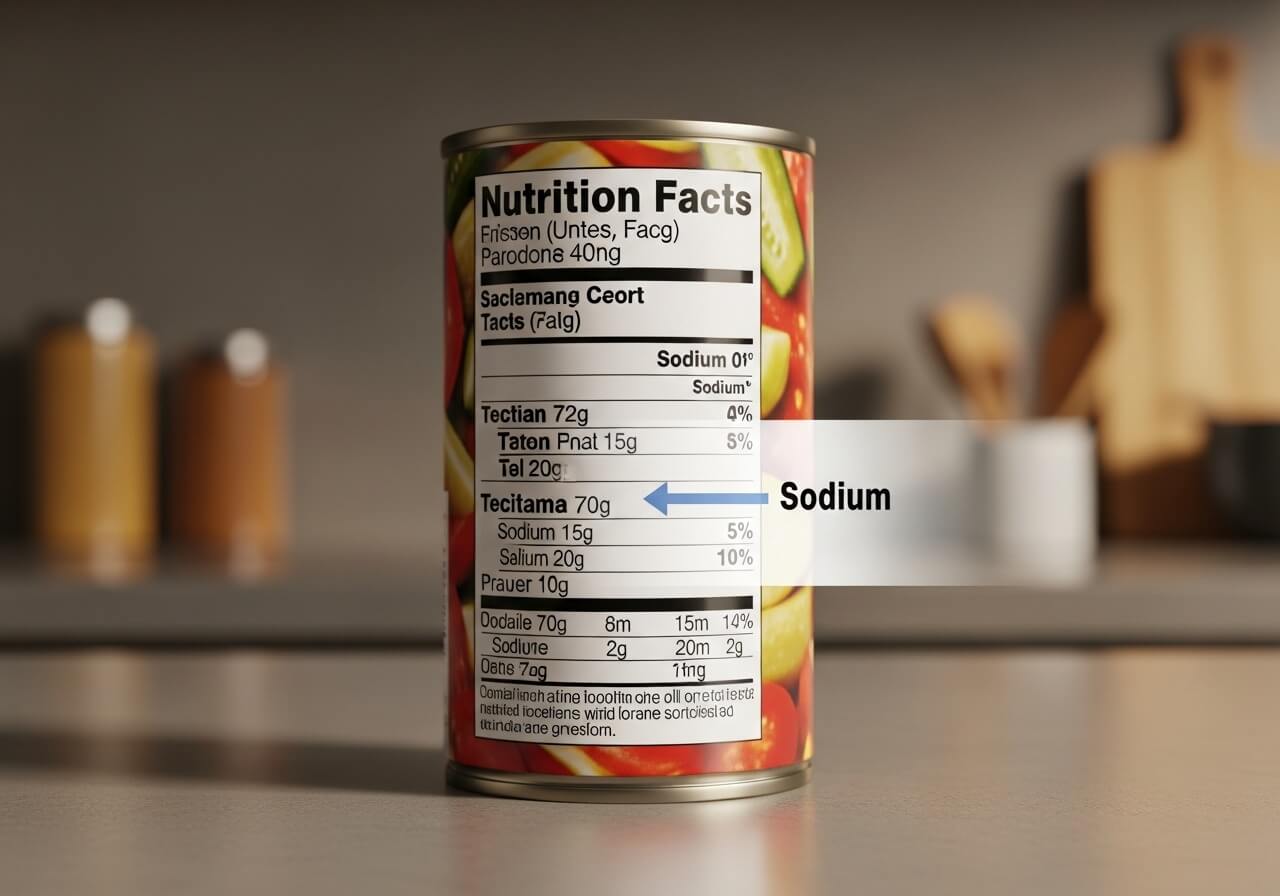
Different situations call for different label priorities. Reading labels becomes more purposeful when you know what to focus on.
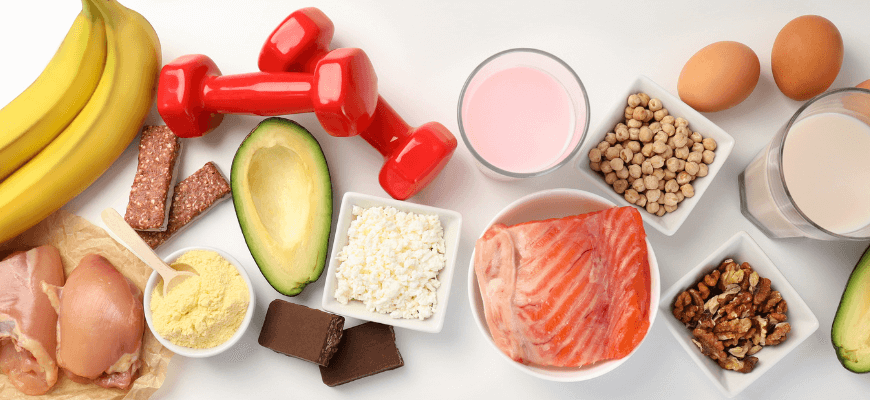
For athletic performance and muscle building: prioritize protein content and compare %DV across snacks and meals. Also check sodium, since sweat losses during training mean electrolyte loss. A post-workout food with protein and some sodium may support recovery better than a low-sodium, low-protein option.
For managing high blood pressure: focus on sodium %DV across all foods. Many processed foods contain significant sodium in unexpected places like bread, cheese, and canned vegetables. Learning to identify high-sodium products helps manage intake.
For managing diabetes or blood sugar: compare added sugars and total carbohydrates. Also check fiber content; foods higher in fiber tend to have a slower effect on blood sugar. The ratio of fiber to sugar matters more than the individual numbers.
For general weight management: serving size and calories become most relevant, because portion control affects total energy intake. This doesn’t mean calories are the only thing that matters, but knowing how many calories are in your actual portion guides portion decisions.
For digestive health or specific nutrient needs: you might focus on fiber, specific minerals like potassium or magnesium, or ingredients to avoid. People with food sensitivities often use the ingredient list and allergen information more than the standard nutrients.
Identify your one or two priority nutrients based on your situation, then scan for those first.
FAQ
What does “daily value” mean on nutrition labels?
Daily Value is a reference number based on a 2,000-calorie diet. It represents the total amount of a nutrient (in grams or milligrams) that an average adult should aim for or stay under in a full day. The % Daily Value shows how much of that daily target is provided by one serving. If a food has 15% DV for calcium, one serving provides 15% of the daily target for calcium.
Why is serving size more important than calories?
Because serving size defines what all the other numbers mean. If the label says 150 calories but doesn’t tell you that’s for half a cup, you can’t interpret whether 150 is appropriate for your portion. Serving size lets you convert label information into real-world eating information.
How often should I check nutrition labels when shopping?
The first time you buy a product, read the label thoroughly. After that, you’ll remember the key details. Re-check labels if a product changes (manufacturers reformulate foods), if you’re comparing a new brand to one you usually buy, or if your dietary needs change. You don’t need to check labels on foods you eat regularly, but new products and store-brand swaps are worth reviewing.
Conclusion
Reading nutrition labels becomes second nature once you know where to look. Start by mastering serving size and the 5%/20% DV rule—these two skills handle most situations. Pick one specific nutrient to focus on this week based on your needs, then build from there. You don’t need to memorize nutrition science; you just need a simple system you can use in 15 seconds at the grocery store.
This content is for educational purposes only and is not medical advice. Always consult a qualified healthcare professional for personalised guidance.